
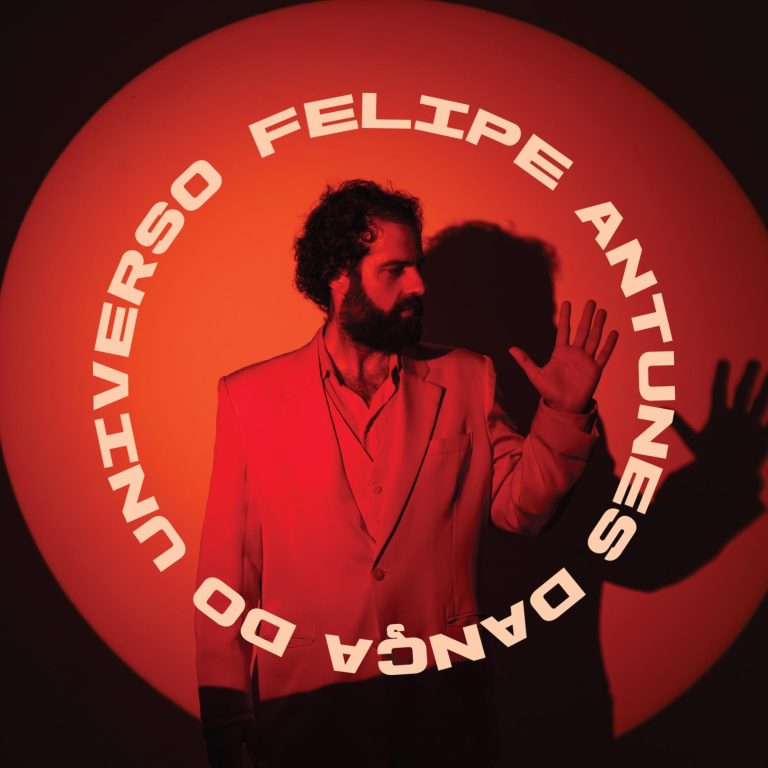
Singer-songwriter Felipe Antunes presents the album Dança do Universo, his latest work, which further establishes his career as an independent artist through a sensory experience centered on connection, time, and collectivity. More than a sequence of songs, the album unfolds as a narrative journey that explores human relationships through the encounter between the body and the city.
In Dança do Universo, Felipe shifts his focus from intimate experiences toward a broader landscape, where individual journeys become part of a collective choreography shaped by emotions, movement, and everyday encounters. The album features the title track, “Pode Apostar,” and the focus track “Quem Tem Vida.”
“‘Quem Tem Vida’ is about freedom. But more than freedom, it speaks about the opportunity to live—to live, and to let those who embrace life live. It is about the point where the limits of tolerance collide with intolerance. About not blaming death, because the blame belongs to those who create death. It is a tribute-protest. A protest for life. A tribute to those who care for life,” says Antunes.
The album opens with “Retalhos,” introducing its central metaphor by connecting the phases of the moon with emotional fluctuations and life in large cities. “Pode Apostar” transforms the idea of an ending into the possibility of a new beginning, while the title track offers a contemplative, almost cosmic experience of the individual within a larger choreography. “São,” meanwhile, brings back a sense of collectivity as a counterpoint to contemporary individualization.
The album’s philosophical dimension deepens in “O Tempo Uma Espiral,” which proposes a non-linear understanding of time, in dialogue with the concept of “spiral time,” popularized by researcher Leda Maria Martins. “Todo Corpo Vivo” confronts structural inequalities as well as ideas of luck and destiny.
In the album’s final section, the narratives take on more intimate contours. “Eu Me Vingo da Tristeza” stems from an encounter with poet Oswaldo de Camargo, transforming his work into a samba that celebrates joy as a form of resistance. “Di Dia Ó Di Noti / De Dia, De Noite” connects Brazil and Guinea-Bissau through a love song in which languages and histories come together again through culture and poetry. Bringing the journey to a close, “Mente” revisits themes of time and existence from an introspective perspective, addressing doubts, pain, and processes of healing.